
It often starts with a few ants in the kitchen or along a windowsill—but not all ants are created equal. For homeowners in Greater Vancouver, knowing whether you’re dealing with carpenter ants or pavement ants can make a major difference in how serious the problem is. A Vancouver carpenter vs pavement ants situation isn’t just about identification—it’s about understanding the risks and acting before a small issue becomes a costly one.
Why Identifying the Right Ant Matters
At first glance, most ants look similar. However, the species inside your home determines the level of threat and the type of treatment required. While pavement ants are primarily a nuisance, carpenter ants can cause structural damage over time by tunneling through wood.
Misidentifying the problem can lead to ineffective DIY treatments, allowing colonies to grow unchecked. That’s why understanding a Vancouver carpenter vs pavement ants scenario is essential for making the right call early.
Carpenter Ants: The Structural Threat
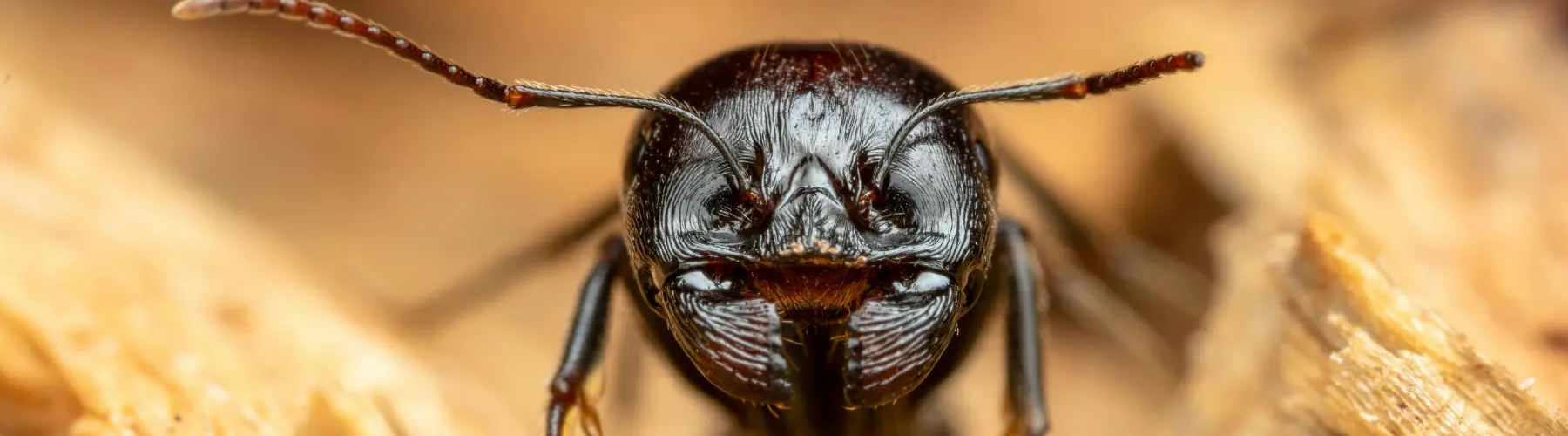
Carpenter ants are one of the most concerning ant species found in Vancouver homes. They are larger than most ants, typically black or dark brown, and are often spotted indoors during the evening when they are most active.
How to Identify Carpenter Ants
Carpenter ants range from about 6–12 mm in length and have a smooth, rounded thorax when viewed from the side and have a single spike node joining the lower abdomen. Unlike termites, they don’t eat wood but excavate it to create nesting galleries.
You may also notice small piles of what looks like sawdust (called frass) near wooden structures—this is a key indicator of carpenter ant activity.
Where They Nest
These ants prefer damp or decaying wood, making Vancouver homes particularly vulnerable due to the region’s moisture levels. Common nesting areas include wall voids, window frames, decks, and crawl spaces.
In a Vancouver carpenter vs pavement ants comparison, carpenter ants pose a much higher risk due to their ability to compromise structural integrity over time.
Pavement Ants: The Persistent Nuisance
Pavement ants are smaller and more commonly found around foundations, driveways, and sidewalks. While they don’t damage wood, they can become a persistent indoor problem if left unmanaged.
How to Identify Pavement Ants
Pavement ants are typically 2.5–4 mm long and range from dark brown to black. They have visible ridges on their head and thorax, and their movement patterns are often more erratic than carpenter ants.
They’re frequently seen trailing in lines along baseboards, countertops, or entry points in search of food.
Where They Nest
These ants build colonies in soil, often beneath concrete slabs, stones, or pavement cracks. From there, they enter homes through small gaps in the foundation.
In a Vancouver carpenter vs pavement ants situation, pavement ants are less destructive but can quickly become overwhelming due to their large colony sizes.
When to Call Pest Control
Not every ant sighting requires professional intervention—but there are clear signs that it’s time to bring in experts.
If you’re seeing large ants indoors, especially near wood structures, it’s best to act quickly. Carpenter ant infestations can remain hidden for months while causing damage behind walls.
For pavement ants, repeated sightings, long visible trails, or recurring infestations despite cleaning efforts indicate that the colony is well-established and needs targeted treatment.
In many Vancouver carpenter vs pavement ants cases, store-bought solutions only address surface activity and fail to eliminate the colony at its source.
Protect Your Home Before the Problem Grows
Whether you’re dealing with a minor nuisance or a potential structural threat, early action is key. Accurately identifying the species is the first step—but fully resolving the issue often requires professional expertise.
If you’re unsure which type of ants you’re seeing or want a long-term solution, our team is here to help. Contact us to schedule an inspection and get expert treatment tailored to your home so you can stay ahead of any infestation before it gets worse.