
Spring Ant Infestations in Homes. It often starts with just a few ants on your kitchen counter. Then suddenly, there’s a steady trail moving along baseboards or near sinks. For many homeowners in Greater Vancouver, this is a familiar early spring problem. A spring ant infestation scenario in homes doesn’t happen by chance—it’s the result of seasonal shifts, and ants move indoors in search of food, moisture, and shelter. Understanding why ants become active in spring—and how they behave—can help you stop the problem before it turns into a full-scale infestation.
Why Ants Invade Homes in Spring
As temperatures rise and the ground begins to thaw, ant colonies that have remained relatively dormant over winter become active again. Their primary goal is to rebuild energy reserves and expand their colonies.
Spring also brings increased moisture, which plays a major role in ant movement. Heavy rainfall and damp soil conditions, common in the Lower Mainland, can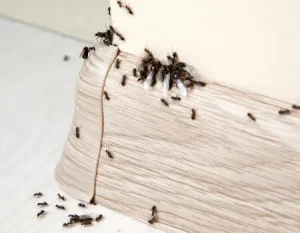 flood outdoor nests, forcing ants to relocate. Homes provide the perfect alternative: warm, dry, and full of accessible food sources.
Once scout ants locate a reliable food supply in your home, they leave behind pheromone trails that guide the rest of the colony indoors. This is how a spring ant infestations in homes situation can escalate rapidly within days.
How Ants Get Inside
Ants are highly efficient when it comes to finding entry points. Even well-maintained homes can have vulnerabilities that go unnoticed.
Structural Gaps and Cracks
Small cracks in foundations, siding, or around windows are common entryways. These gaps may seem insignificant but are more than enough for ants to pass through.
Doors, Windows, and Utility Openings
Poorly sealed doors and windows, along with gaps around pipes and wiring, offer direct access into your home. These areas are especially vulnerable during seasonal temperature changes.
Exterior Landscaping
Branches, shrubs, and mulch beds that come into contact with your home can act as bridges, allowing ants to bypass exterior barriers entirely.
Once these access points are established, a spring ant infestations in homes issue can quickly spread as more ants follow established scent trails.
What Attracts Ants Indoors
Ants are constantly searching for food and water, and even minor sources can attract large numbers.
Food Sources
Crumbs, sugary spills, and improperly stored food are major attractants. Kitchens, pantries, and
garbage areas are the most common hotspots.
Moisture and Water
Leaky faucets, damp basements, and condensation create ideal hydration sources. In a region like Greater Vancouver, where humidity levels are often elevated, this becomes a significant factor.
Shelter and Warmth
Indoor environments provide consistent temperatures and protection from outdoor conditions, making them highly appealing during early spring.
These factors reinforce a spring ant infestations in homes cycle, encouraging ants to return and expand their presence.
How to Eliminate Ants for Good
Stopping ants requires more than just dealing with the ones you can see. Long-term control focuses on removing what attracts them and blocking access.
Remove Food and Water Sources
Keep surfaces clean, wipe up spills immediately, and store food in airtight containers. Address moisture issues by fixing leaks and improving ventilation in damp areas.
Seal Entry Points
Inspect your home’s exterior and seal cracks, gaps, and openings with appropriate materials. This reduces the chances of ants gaining access in the first place.
Break Ant Trails
Cleaning visible trails with household solutions like vinegar can disrupt pheromone signals and slow down ant activity.
However, these methods may only provide temporary relief if the colony itself remains intact. A persistent spring ant infestations in homes problem often indicates a larger nest nearby or within the structure.
When Professional Pest Control Is Necessary
If ants keep returning despite your efforts, it’s likely that DIY solutions aren’t addressing the root cause. Most store-bought treatments only eliminate surface-level activity, leaving the colony untouched.
Professional pest control services are designed to locate and eliminate the source of the infestation. By targeting the nest directly, these treatments provide long-term results and help prevent recurring issues throughout the season.
Take Control of Ant Problems This Spring
Spring ant activity is a predictable issue for homeowners in Greater Vancouver, but it doesn’t have to become a recurring problem. By understanding the causes behind a spring ant infestation in homes, you can take proactive steps to protect your property.
If you’re noticing ongoing ant activity or want to prevent an infestation before it worsens, now is the time to act. Visit our contact page today to schedule a professional inspection and get expert help eliminating spring ant infestations in homes for good.