

As temperatures begin to rise across Greater Vancouver, wasps quietly emerge from their winter dormancy—and most homeowners don’t notice until it’s too late. What starts as a single queen searching for a nesting site can quickly turn into a full colony buzzing around your property. Understanding spring wasp nest identification Vancouver homeowners can rely on is key to stopping infestations before they escalate.
Why Wasp Activity Increases in Spring
Spring marks the beginning of the wasp life cycle. Fertilized queen wasps, which have overwintered in sheltered areas like attics, tree bark, or wall voids, become active as temperatures climb. Their primary goal is to establish a new colony.
The Role of the Queen Wasp
In early spring, the queen works alone to build a small starter nest and lay the first batch of eggs. During this stage, activity may seem minimal—just a single wasp flying back and forth. However, this is the most critical time for spring wasp nest identification Vancouver residents should be aware of.
Rapid Colony Expansion
Once the first generation of worker wasps matures, they take over nest-building and food gathering. At this point, colony growth accelerates quickly, often catching homeowners off guard.
How to Spot Early Wasp Nests
Early detection is your best defense. Spring nests are typically small—often no larger than a golf ball—but they are the foundation of a much larger problem.
Common Nesting Locations
Wasps tend to choose sheltered, low-traffic areas that offer protection from the elements.
Roof Eaves and Overhangs
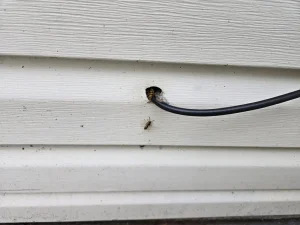
Wasps can find openings in the most pest-proof houses; always stay vigilant.
These areas provide cover and are among the most common early nesting spots.
Sheds, Garages, and Decks
Structures with minimal disturbance are ideal for queens establishing nests.
Trees and Shrubs
Branches and dense foliage can conceal small nests during early development.
Recognizing these locations are essential for effective spring wasp nest identification, Vancouver homeowners can act early.
What Early Nests Look Like
Early nests are typically grey to brown, papery, and round, with a small opening. They may hang from surfaces or be tucked into corners. Because they’re small, they’re easy to overlook unless you’re actively checking.
Why Early Action Matters
Ignoring early wasp activity can lead to serious issues later in the season. What starts as a minor nuisance can become a safety concern by mid to late summer.
Increased Aggression
As colonies grow, wasps become more defensive of their nests. This increases the likelihood of stings, especially in high-traffic areas around your home.
Risk to Families and Pets
Children and pets are particularly vulnerable, especially if nests are located near entryways or outdoor living spaces.
Structural and Property Concerns
Wasps nesting in wall voids or roof spaces can create ongoing problems. While they don’t cause structural damage in the same way as rodents do, their presence can make areas of your home difficult or unsafe to use.
Catching the issue early through proper spring wasp nest identification Vancouver strategies significantly reduces these risks.
Preventing Wasp Nests Around Your Home
While not all nests can be prevented, there are several proactive steps homeowners can take to reduce the likelihood of infestation.
Limit Attractants
Wasps are drawn to food and sugary substances.
Secure Garbage and Recycling
Keep bins tightly sealed and clean to avoid attracting foraging wasps.
Manage Outdoor Eating Areas
Clean up spills and food residue promptly, especially on patios and decks.
Inspect and Maintain Your Property
Routine inspections can make a major difference.
Seal Entry Points
Close off gaps in siding, soffits, and around vents where wasps might enter.
Regular Visual Checks
Make it a habit to inspect eaves, sheds, and other common nesting areas during early spring.
Consistent monitoring supports effective spring wasp nest identification Vancouver homeowners can use to stay ahead of infestations.
When to Call Pest Control
If you spot a nest—even a small one—it’s important to assess the situation carefully. While early nests may seem manageable, attempting treatment or removal without proper equipment can be risky.
Signs You Need Professional Help
- The nest is in a hard-to-reach or inside an enclosed space
- Wasp activity is increasing
- You’re unsure of the species or risk level
- There are multiple nests forming on the property
Professional pest control technicians can safely treat and, in most cases, remove accessible nests and treat the area to prevent re-infestation. More importantly, they address the root of the problem—not just the visible symptoms.
Protect Your Property Before Wasps Take Over
Spring is the narrow window where wasp problems are easiest to control. By focusing on spring wasp nest identification Vancouver homeowners can catch issues early and avoid the stress and danger of a full infestation later in the season.
If you’ve noticed wasp activity or suspect a nest forming on your property, don’t wait for it to grow. Contact our team today through our website to schedule a professional inspection and ensure your home stays safe all season long.