
What They Are, Why They Appear, and How to Identify Them
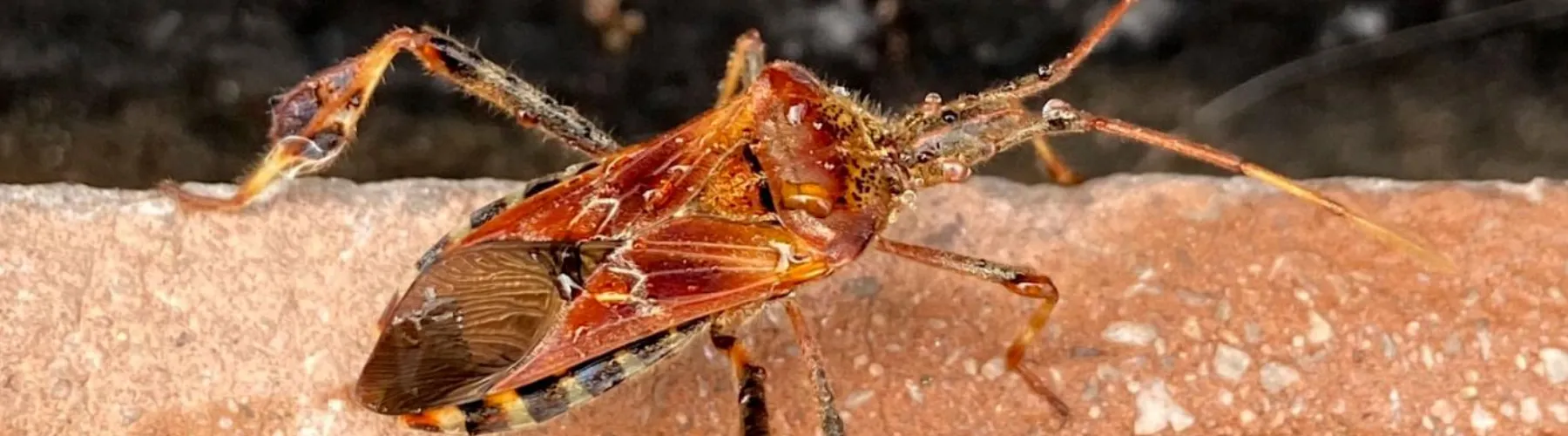
As fall settles in, Western Conifer Seed Bugs start making their way indoors—often mistaken for stink bugs due to their shape and sluggish movements. These shield-shaped insects aren’t harmful, but they can be a nuisance. When disturbed, they release a distinctive pine-like odor, which is their natural defense mechanism.
Here’s what you need to know about these fall visitors, why they show up when they do, and what actually works if you’d rather not share your home with them.

Western Conifer Seed Bugs (WCSBs) are part of the leaf-footed bug family and have a few distinct features:
- Size: About 16–20 mm long (larger than most stink bugs)
- Shape: Shield-like body with a narrow waist and leaf-shaped hind legs
- Color: Brownish with orange markings on the sides
- Movement: Slow and deliberate; they often fly with a loud buzzing sound
- Smell: When disturbed, they release a pine-like odor—not as pungent as stink bugs
| Feature | Western Conifer Seed Bug | Stink Bug |
|---|---|---|
| Body Shape | Elongated, shield-shaped with leaf-like hind legs | Broad, shield-shaped, symmetrical |
| Size | Larger (16–20 mm) | Smaller (12–15 mm) |
| Colour | Brown with orange markings | Gray or brown with mottled patterns |
| Odour when disturbed | Pine-like scent | Pungent, foul odour |
| Flight sound | Loud, buzzing | Quiet or soft flutter |
| Behaviour Indoors | Slow-moving, seeks warmth | Slow-moving, also seeks warmth |
| Seasonal Activity | Most active in fall | Active in late summer and fall |
| Harm to Home | No damage; nuisance only | No damage; nuisance only |
| Common Misidentification | Often mistaken for stink bugs | Rarely mistaken for WCSBs |
Quick Tip:
If it smells like a Christmas tree and has leaf-shaped legs, it’s probably a WCSB.
Why They Come Indoors
These bugs overwinter in warm, dry places—your home being a prime target. They don’t reproduce indoors or cause structural damage, but they can gather in large numbers and become a seasonal annoyance.
They’re drawn to:
- Cracks around windows and doors
- Attics and wall voids
- Siding and soffits
- Warm, sunlit surfaces
Prevention Strategies
You don’t need chemicals to keep WCSBs out—just smart sealing and maintenance.
Seal Entry Points
- Use caulk to seal cracks around windows, doors, and siding
- Install weather stripping and door sweeps
- Check attic vents and soffits for gaps
Outdoor Maintenance
- Remove leaf litter and wood piles near your home
- Trim back vegetation touching your siding
- Inspect exterior walls for gaps or loose panels
Screen Smart
- Repair or replace damaged window and door screens
- Use fine-mesh screens in attic vents
Indoor Tips
- Vacuum up bugs instead of squashing them (to avoid odor)
- Store vacuum bags outside until disposal
- Avoid using sprays—they’re not necessary for WCSBs
How to Get Rid of Western Conifer Seed Bugs
Don’t squish them. This is the single most important tip—crushing releases that pine-like odor and can leave a stain. Instead:
- Vacuum them up. A shop vac or regular vacuum with a disposable bag works well. Empty the bag outside afterward.
- Use a cup-and-paper method. Trap the bug under a cup, slide paper underneath, and release it outside.
- Seal entry points. Caulk gaps around windows, doors, siding, utility lines, and vents. Repair damaged window screens and add door sweeps where needed.
- Check attic and soffit vents. Make sure they’re properly screened, since these are common entry points for overwintering insects.
Fun Fact
Western Conifer Seed Bugs feed on the seeds of conifer trees like pine and fir. That’s why they’re common in forested areas and neighborhoods with lots of evergreens.
Final Though: While they’re harmless, Western Conifer Seed Bugs can be unsettling when they show up in droves. With a few simple steps, you can keep your home bug-free and enjoy the season without the pine-scented surprise.